Our Saints
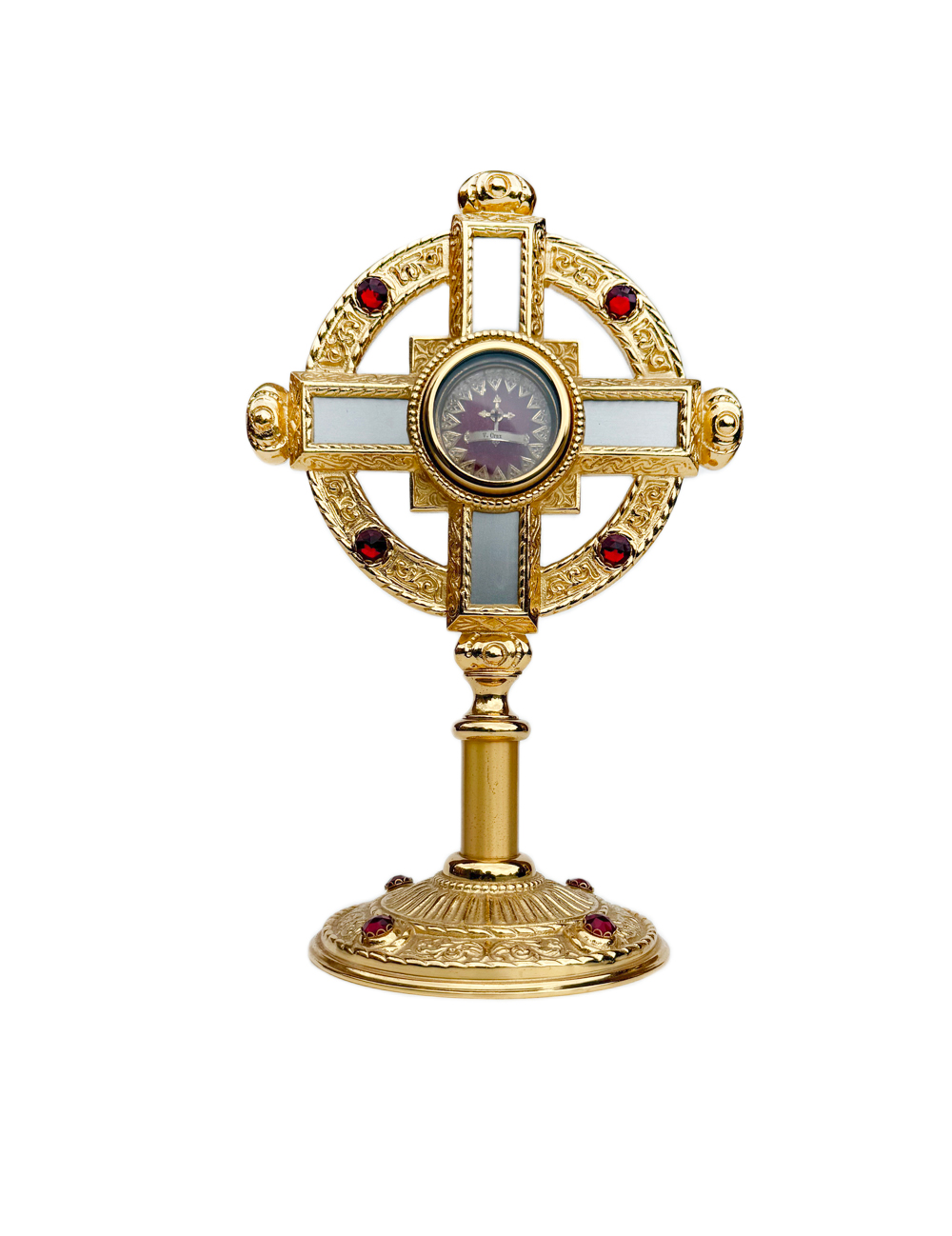
Holy Cross
Crux Domini nostri Iesu Christi
Patronage
Sign of salvation, Christians, the Church
The Holy Cross is the most important symbol of Christianity and the key to understanding the Gospel. On the cross, Jesus of Nazareth gave His life in Jerusalem around the years 30–33, taking upon Himself the burden of human sin. What had been an instrument of shame and punishment became a sign of love stronger than death.
From the fourth century onward, the Church has commemorated the finding of the wood of the Cross, which tradition associates with Empress Helena. Fragments regarded as relics of the Cross were brought to many churches, where they inspire gratitude and conversion.
In the liturgy, two days in particular recall its meaning: Good Friday and the Feast of the Exaltation of the Holy Cross on September 14. The Cross directs attention to the words of forgiveness that Jesus spoke to His persecutors. It also teaches trust in the Father in moments of fear and loneliness.
In iconography, the Cross takes many forms, yet it always points to the victory of love. The faithful contemplate the mystery of the Cross in the devotion of the Stations of the Cross, walking the path of the Lord’s Passion. The Cross unites Christians of many traditions, for all see in it the source of salvation. For some, it is a sign of hope in suffering; for others, a school of humility and fidelity.
Around the Cross arises an attitude of service, which Jesus revealed when He washed the feet of His disciples. Veneration of relics does not focus on the material itself, but on the saving event they commemorate. Before the Cross, the human person discovers that God does not abandon him in darkness, but leads him toward the Resurrection. For this reason, the Cross in homes and churches reminds us that the final word belongs to love.
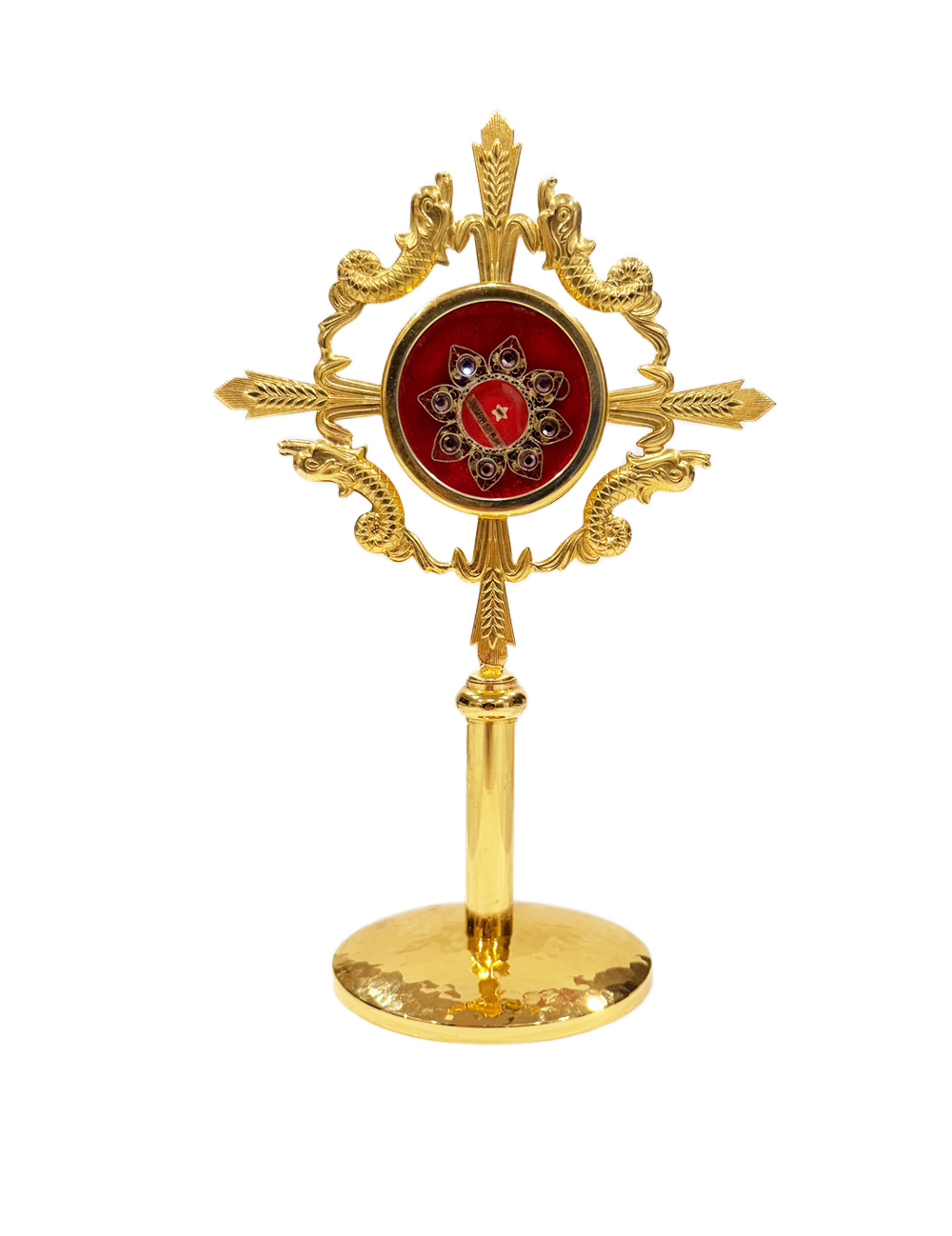
Robe of Saint Joseph
Vestimentum Sancti Ioseph
Patronage
Families, fathers, the Church
The cloak of Saint Joseph recalls the figure of the silent guardian of Jesus and the Spouse of Mary. The Gospels speak of him only briefly, yet they present him as a righteous man, obedient to God. Joseph listened to God’s voice in dreams and carried out His will without hesitation. He took Mary into his home, protected the Child during the flight into Egypt, and returned with his family to Nazareth.
The cloak is a symbol of responsibility and of daily work that sustains the lives of loved ones. Tradition recalls mementos connected with the Holy Family, and fragments of garments help the faithful contemplate the mystery of the Incarnation. Joseph did not seek recognition, yet he became the patron of the universal Church. He is also an intercessor for families, fathers, and workers.
His example teaches gentle courage: the ability to remain present when things are difficult and to make decisions without violence. Devotion to Saint Joseph nurtures trust that God leads us through ordinary duties. In iconography, Joseph is often shown holding a lily, a sign of purity of heart and life. The Church celebrates his liturgical feast on March 19, and May 1 recalls his work.
Relics and devotional objects associated with Joseph are for many a sign of protection over the home. The faithful entrust to him their material concerns, the upbringing of children, and professional matters. The cloak of Saint Joseph reminds us that holiness matures in silence and faithfulness to everyday life. His attitude shows how to unite responsibility with gentleness.
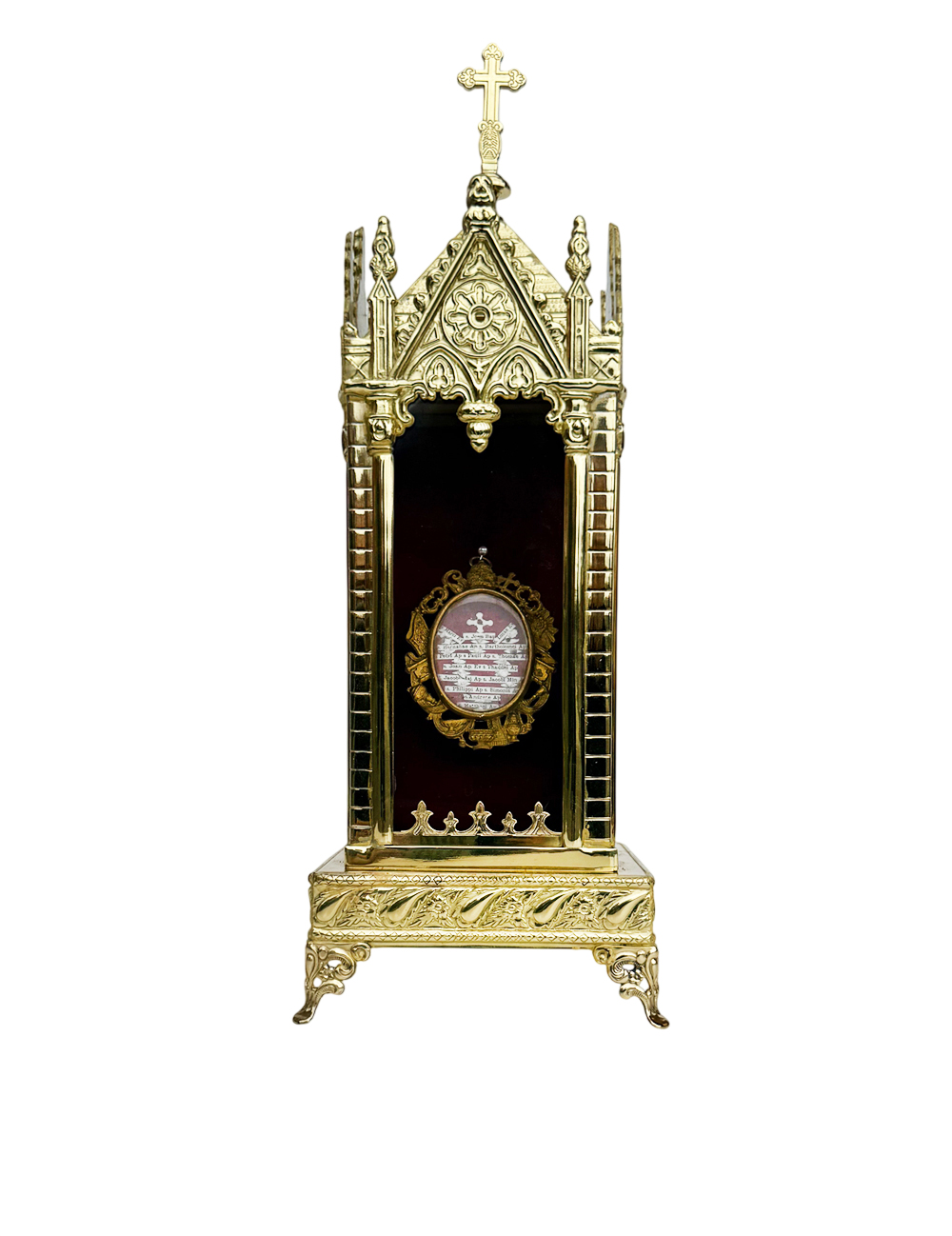
Matthew the Apostle
Matthaeus Apostolus
Patronage
Tax collectors, revenue officers, bankers
Saint Matthew, also called Levi, was a tax collector in Capernaum when Jesus called him with the words, “Follow me.” He left his former occupation and joined the circle of the disciples, beginning a path of simplicity and service. The Church regards him as the author of the first Gospel, in which the prophecies are fulfilled. Matthew places strong emphasis on the teaching about the Kingdom of God and on the call to conversion of heart.
His Gospel contains the Beatitudes and the prayer “Our Father,” which shape the life of a disciple. Matthew’s symbol is the winged man, highlighting the mystery of the Incarnation. Tradition holds that he preached in Ethiopia and in regions of the Levant, strengthening young Christian communities. In icons, he is shown holding a scroll or a book, a sign of his witness to the inspired Word.
Accounts speak of his martyrdom, although the details are uncertain. His relics are venerated, among other places, in Salerno, to which pilgrims travel seeking fidelity to the Gospel. Matthew shows that God also chooses those whom others dismiss. His story encourages trust that every life can be transformed. He is the patron saint of tax officials, bankers, and all who desire integrity. His liturgical feast is celebrated on September 21. Through Matthew, we learn to look at the law through the eyes of mercy.
Luke the Evangelist
Lucas Evangelista
Patronage
Physicians, artists, icon painters
Saint Luke, regarded as a physician and a companion of Saint Paul, left the Church two books: the Gospel and the Acts of the Apostles. His style is gentle and attentive to the fate of the poor, the sick, and those who are overlooked. It is in Luke’s Gospel that we read the parables of mercy: the Prodigal Son, the Good Samaritan, and the Rich Man and Lazarus. He also handed on the accounts of Jesus’ infancy and the hymns of Zechariah, Mary, and Simeon.
Tradition attributes to him the earliest images of the Mother of God; for this reason, he is also honored as the patron saint of icon painters. Luke’s symbol is the ox, a sign of sacrifice and patient labor. In the Acts of the Apostles, he described the beginnings of the Church, the activity of the apostles, and the work of the Holy Spirit. Luke presents the Gospel as a joy that spreads throughout the world despite persecution.
According to tradition, he preached in Greece and Boeotia, and his relics are venerated, among other places, in Padua. His liturgical feast is celebrated on October 18. His writings help us discover that God bends down toward the weak and heals the wounds of the heart. Luke teaches a language of gratitude that brightens everyday life. The faithful ask his intercession for wisdom, health, and courage in bearing witness. His Gospel continues to open doors to an encounter with mercy.
Mark the Evangelist
Marcus Evangelista
Patronage
Notaries, writers, Egypt
Saint Mark was a disciple and co-worker of the apostles, especially Saint Peter, whose catechesis he preserved in his Gospel. His account is the shortest, dynamic, and rich in actions that reveal the identity of Jesus. Mark does not develop long discourses; instead, he leads the reader to a profession of faith at the foot of the Cross.
Tradition associates him with Alexandria, where he founded the Church and suffered martyrdom. Mark’s symbol is the lion, a sign of courage and the kingship of Christ. Venice preserves his relics and honors him as the heavenly patron of the city. His Gospel begins with a call to repentance and faith, which open the way to the Good News.
Mark presents Jesus as the one who heals, frees, and calls to discipleship without compromise. He also emphasizes the mystery that the disciples come to understand gradually as they follow the Master. The Evangelist urges us to follow Christ here and now, without delay. His liturgical feast is celebrated on April 25. His witness strengthens courage in proclaiming the truth. Through Mark, the Church hears that the Cross is not the end, but the gateway to life. Fidelity to the Gospel requires a heart open to the action of God.
John the Apostle
Ioannes Apostolus
Patronage
Theologians, friendship, youth
Saint John, the son of Zebedee and the brother of James, belonged to the closest circle of Jesus’ disciples. The Gospel calls him the beloved disciple, who remained at the foot of the Cross and took Mary into his home. Tradition attributes to him the Gospel, three Letters, and the Book of Revelation, which have shaped the Church’s spiritual sensitivity. John speaks of the Word made flesh and of love that casts out fear.
His symbol is the eagle, soaring high above the mystery of God. In John’s writings, light and darkness mark the path of choice, and truth leads to freedom. According to tradition, he ministered in Ephesus and lived to an advanced age, dying a natural death. His Gospel helps believers enter into intimacy with Jesus and teaches perseverance in love.
John’s tomb is venerated on the hills of Ephesus, to which the faithful make pilgrimages. His liturgical feast is celebrated on December 27. John reminds us that God loved us first, and that we are called to love our brothers and sisters. His words have echoed in the Church for centuries and continue to awaken hope. In the face of trials, John encourages trust in the One who has conquered the world.
Peter the Apostle
Petrus Apostolus
Patronage
Fishermen, popes, the Church
Saint Peter, formerly Simon, was a fisherman from the Sea of Galilee when Jesus called him to be a disciple. He heard the words, “You are Peter, and upon this rock I will build my Church.” He experienced failure by denying his Master, yet he also encountered mercy and a renewed mission. After the Resurrection, he strengthened his brothers in faith and proclaimed the Gospel with courage.
Tradition holds that he suffered martyrdom in Rome, where he was crucified upside down. His relics are venerated in the Vatican Basilica, above the site of an ancient cemetery. Peter’s symbol is the keys, a sign of the authority to bind and to loose. In his letters, he left teachings on hope, humility, and fidelity amid trials.
Peter teaches that holiness begins with trust, not with perfection. The feast of Saints Peter and Paul is celebrated on June 29, as the Church gives thanks for its foundations. His example strengthens unity and faith within the community of believers. In daily life, Peter encourages us to listen to the Lord rather than to human voices. Through him, we see that God builds great works upon humble hearts.
Barnabas the Apostle
Barnabas Apostolus
Patronage
Missionaries, Cyprus
Saint Barnabas, a Levite from Cyprus, was a man of great heart and faith. It was he who brought the converted Saul into the community and gave him a place within the Church. Together with Paul, he undertook the first missionary journey, strengthening young Christian communities. Barnabas sold his property and gave the proceeds to the Church, offering an example of generosity.
His name means “son of encouragement,” and it truly reflects his manner of service. He was a man of reconciliation, seeking to build bridges where others raised walls. Tradition speaks of his martyrdom in Cyprus, his homeland. The relics of Barnabas are venerated near Salamis, and his memory unites East and West.
His liturgical feast is celebrated on June 11. Barnabas is the patron of missionaries, catechists, and all who support vocations. He teaches that the Gospel grows through trust and patience. His life shows that the Church needs people of goodness who make room for grace.
Bartholomew the Apostle
Bartholomaeus Apostolus
Patronage
Butchers, tanners, Armenia
Saint Bartholomew, often identified with Nathanael, was praised by Jesus as a man without deceit. He belonged to the group of the Twelve and accompanied the Master from the beginning of His ministry. Tradition connects his mission with Armenia, Arabia, and India, where he proclaimed Christ.
According to tradition, he suffered a martyr’s death, and the knife became his attribute. In art, he is often depicted holding a book and a knife, pointing to the cost of fidelity to the Gospel. His relics are venerated in Rome and Benevento, and his memory remains alive in both the Eastern and Western Churches.
His liturgical feast is celebrated on August 24. Bartholomew is the patron saint of craftsmen and tanners, as well as of those who face difficult choices. His example shows that the truth sets us free, even though it requires courage. Fidelity to God leads through the Cross to the joy of the Resurrection. Through Bartholomew, the Church remembers that a simple heart is able to recognize the Son of God.
Thomas the Apostle
Thomas Apostolus
Patronage
Architects, India, the faith of doubters
Saint Thomas the Apostle, also called Didymus (“the Twin”), belonged to the group of the Twelve disciples of Jesus. The Gospels portray him as a sincere seeker of truth, a man unwilling to settle for a superficial faith. He is best known for the moment after the Resurrection when he refused to believe until he could touch the wounds of the Master.
This encounter with the risen Christ transformed his doubt into one of the most profound professions of faith: “My Lord and my God.” These words have become one of the shortest and most beautiful confessions of faith in the entire New Testament. Thomas shows that God does not reject honest questions, but leads the human heart toward deeper trust. “Church tradition holds that Thomas carried the Gospel as far as India, where Christian communities still today call themselves the “Christians of Saint Thomas.” He suffered martyrdom, most likely pierced by a spear. In iconography, he is depicted with a builder’s square or a spear, symbols of the search for truth and fidelity to the end. He is the patron saint of architects, builders, and all who seek the truth despite doubt. His witness reminds us that the path of questions can lead to mature and profound faith.
James the Greater
Jacobus Maior Apostolus
Patronage
Pilgrims, Spain, workers
Saint James the Greater was the son of Zebedee and the brother of John the Evangelist. He belonged to the closest circle of Jesus’ disciples and accompanied Him at decisive moments of His mission, such as the Transfiguration on Mount Tabor and the prayer in the Garden of Gethsemane. He was a man of fervor and courage, full of zeal, and for this reason he and his brother were given the nickname “Sons of Thunder.” After the Resurrection of Christ, James proclaimed the Gospel with dedication and bore witness to his faith to the very end. He was the first of the Apostles to give his life for Christ, being beheaded by order of King Herod Agrippa around the year 44. His martyrdom became a sign that fidelity to the Gospel may require the ultimate sacrifice. Church tradition holds that his relics were brought to Santiago de Compostela in Spain, which became one of the greatest pilgrimage destinations in Europe. He is the patron saint of pilgrims, travelers, and farmers. In iconography, he is depicted with a pilgrim’s staff and a scallop shell, symbols of the journey, spiritual growth, and the constant call to follow Christ.
James the Less
Jacobus Minor Apostolus
Patronage
Pharmacists, the dying
Saint James the Lesser, the son of Alphaeus, belonged to the group of the Twelve Apostles. Church tradition identifies him with James known as the “brother of the Lord,” who played a key role in the early Christian community and led the Church in Jerusalem. According to the Acts of the Apostles, he presided over the first Council of Jerusalem, helping the Church discern how to remain faithful to the Gospel while welcoming Gentile converts. James the Lesser was known for the holiness of his life, his devotion to prayer, and his deep sense of justice, and for this reason he was called “the Just.” His Letter in the New Testament reminds believers that faith, if it does not express itself in works, is dead. He suffered martyrdom, being stoned and then struck down with a club, remaining faithful to Christ to the end. In iconography, he is depicted with a club or a scepter, symbols of his martyrdom and spiritual authority. He is the patron saint of workers and weavers, and his life reminds us that the Church is built upon quiet fidelity, prayer, and daily witness to a faith lived in action.
Philip the Apostle
Philippus Apostolus
Patronage
Confectioners, pastry cooks
Saint Philip came from Bethsaida and belonged to the first disciples called by Jesus. The Gospels present him as a man open to encounter and eager to share it with others—it was he who brought Nathanael to the Master, offering an example of simple and trusting apostleship. His attitude shows that faith often grows through personal invitation and witness. Philip appears in key moments of the Gospel: at the multiplication of the loaves and in the Upper Room, when he asked Jesus, “Lord, show us the Father.” This request reveals his desire to know God more deeply and to understand the mystery of Christ, who leads him toward a more mature faith by revealing that whoever sees Him sees the Father. Church tradition holds that Saint Philip proclaimed the Gospel in Asia Minor and suffered martyrdom in Phrygia. In iconography, he is depicted with a cross or a book, signs of proclaiming the Word and fidelity to the end. He is the patron saint of bakers and hat makers. His life reminds us that true discipleship consists in leading others to Christ with humility and trust.
Andrew the Apostle
Andreas Apostolus
Patronage
Fisheries, Russia, Scotland
Saint Andrew was the brother of Saint Peter and the first disciple called by Jesus. The Gospel presents him as a man who did not keep the gift of encountering Christ to himself—it was he who brought Peter to the Lord, becoming a model of quiet yet effective apostleship. His example reminds us that the path to faith often passes through the witness of those who are close to us. After the descent of the Holy Spirit, Andrew proclaimed the Gospel in many lands, reaching as far as Greece. Church tradition holds that he suffered martyrdom in Patras, where he was crucified on a cross in the shape of the letter X, now known as the Cross of Saint Andrew. He accepted his death with humility, considering himself unworthy to die in the same manner as his Master. Saint Andrew is the patron saint of Scotland, Greece, and Russia, and his liturgical feast on November 30 marks the beginning of Advent in the Church—a time of watchful waiting for the coming of the Lord. In iconography, he is depicted with the Cross of Saint Andrew, a sign of fidelity to the end. His life teaches that true discipleship means leading others to Christ and offering one’s entire life to Him.
Simon the Zealot
Simon Zelotes Apostolus
Patronage
Woodcutters, dyers
Saint Simon the Zealot belonged to the group of the Twelve Apostles chosen by Jesus. His title, “the Zealot,” may indicate that before his calling he was associated with the Zealot movement, which sought the liberation of Israel. Encountering Christ gave his zeal a new meaning—not violent struggle, but total dedication to the Gospel.
The Gospels provide only a few details about his life, emphasizing that the value of discipleship does not depend on public recognition but on fidelity. Church tradition holds that Simon proclaimed the Gospel in the East, reaching distant regions. According to ancient accounts, he suffered martyrdom in Persia together with Saint Jude Thaddeus, giving his life for Christ.
In iconography, Saint Simon is often depicted holding a saw, the instrument of his martyrdom, which became a sign of perseverance to the end. He is the patron saint of dyers and woodcutters—people of labor who sanctify their lives through daily work. His witness reminds us that true zeal is born of love for God and leads to quiet, faithful service to the Church.
Paul the Apostle
Paulus Apostolus
Patronage
Theologians, missionaries, cities
Saint Paul, a Jew from Tarsus by birth, was at first a zealous persecutor of Christians, convinced that he was defending fidelity to the Law. On the road to Damascus, however, he encountered the risen Jesus, an experience that completely transformed his life and way of thinking. From a persecutor he became the Apostle to the Nations, devoting his strength to proclaiming the Gospel to those outside Israel. He undertook three great missionary journeys, founded Christian communities, and strengthened them through teaching and personal witness of faith. His Letters became part of the canon of the New Testament and belong to the foundations of the Church’s teaching, revealing the depth of the mystery of Christ and proclaiming that salvation is a gift of God’s grace rather than the result of human merit. Paul suffered martyrdom in Rome around the year 67, being beheaded with a sword as a Roman citizen. He is the patron saint of theologians, missionaries, and preachers, and his life reminds us that God’s grace can transform even the most hardened heart and make it an instrument of the Gospel.
Jude the Apostle
Judas Thaddaeus Apostolus
Patronage
Difficult and hopeless causes
Saint Jude Thaddeus, also known as Lebbaeus, belonged to the group of the Twelve Apostles of Jesus. The Gospels present him as a faithful disciple who desired to understand more deeply Christ’s revelation and His relationship with the Father. Church tradition holds that after the descent of the Holy Spirit, Jude proclaimed the Gospel in Mesopotamia and Persia, bringing the Good News to distant communities. He suffered martyrdom, most likely being beheaded or killed with a club, giving his life for faith in Christ. In iconography, he is depicted with a medallion of Christ upon his chest, symbolizing his closeness to the Lord and the call to bear Christ’s image within the heart. Saint Jude Thaddeus is especially venerated as the patron saint of difficult and seemingly hopeless causes, teaching trust where human solutions have failed. His liturgical feast is celebrated on October 28 together with Saint Simon the Zealot. His life reminds us that hope rooted in Christ does not disappoint, even in the most desperate circumstances.
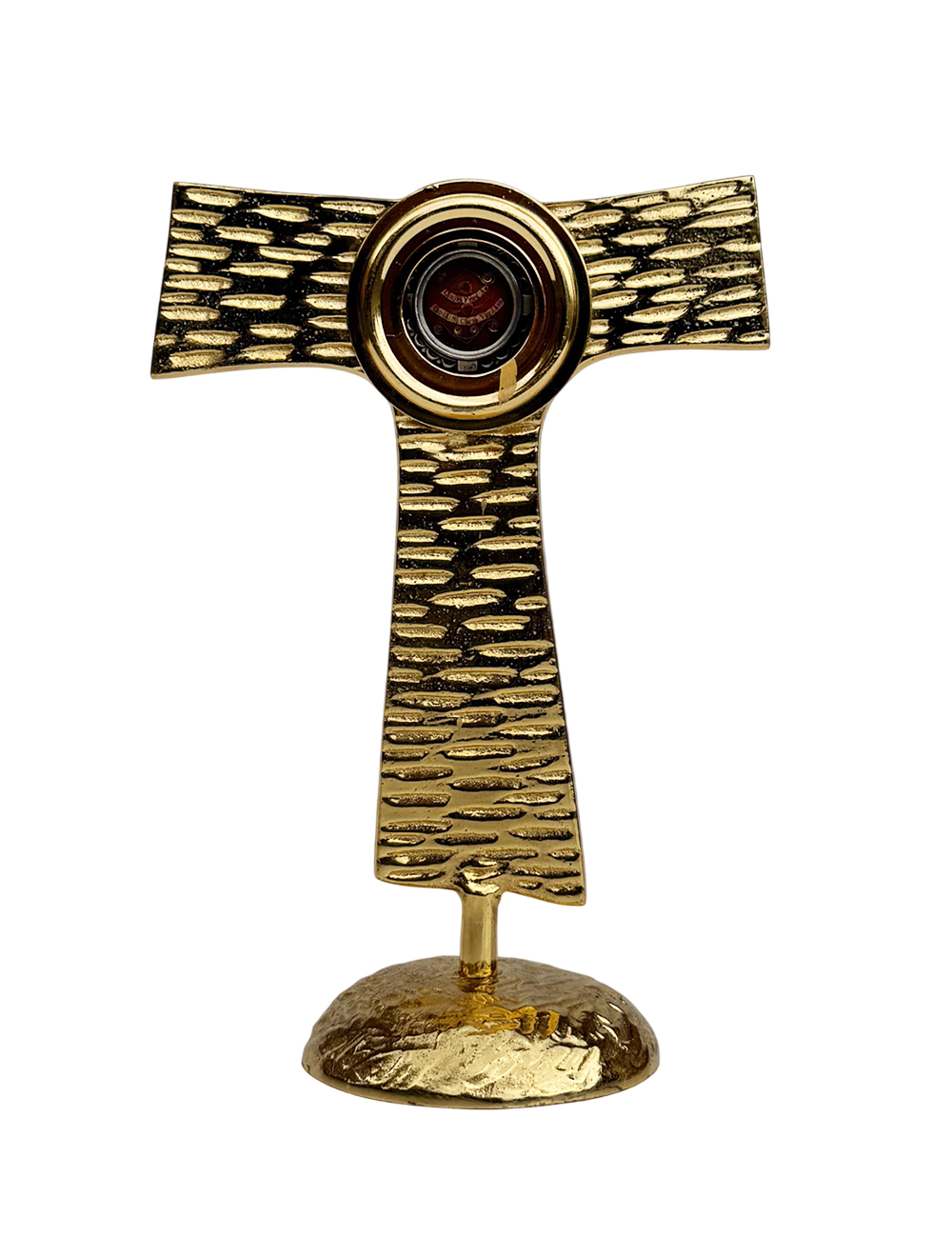
Francis of Assisi
Franciscus Assisiensis
Patronage
The poor, ecology, animals
Saint Francis of Assisi was born around 1181/1182 in Assisi into a wealthy merchant family. He spent his youth carefree, dreaming of knightly glory, but experiences of illness and encounters with the poor gradually transformed his heart and outlook on life. He heard Christ’s call to “rebuild my Church,” which he first understood literally by repairing ruined chapels and later came to recognize as a call to the spiritual renewal of the community of believers. Brothers soon gathered around Francis, desiring to live the Gospel in simplicity, poverty, and fraternity, and thus the Order of Friars Minor was born. Francis loved all of creation, seeing it as a reflection of the Creator’s goodness, a vision beautifully expressed in his Canticle of the Creatures. In 1224 he received the stigmata, becoming conformed to the crucified Christ. He died on October 3, 1226, at the Porziuncola. He is the patron saint of ecologists, animals, and peace, and his relics rest in Assisi. His life reminds us that true joy is born of simplicity, trust in God, and love for all creation.
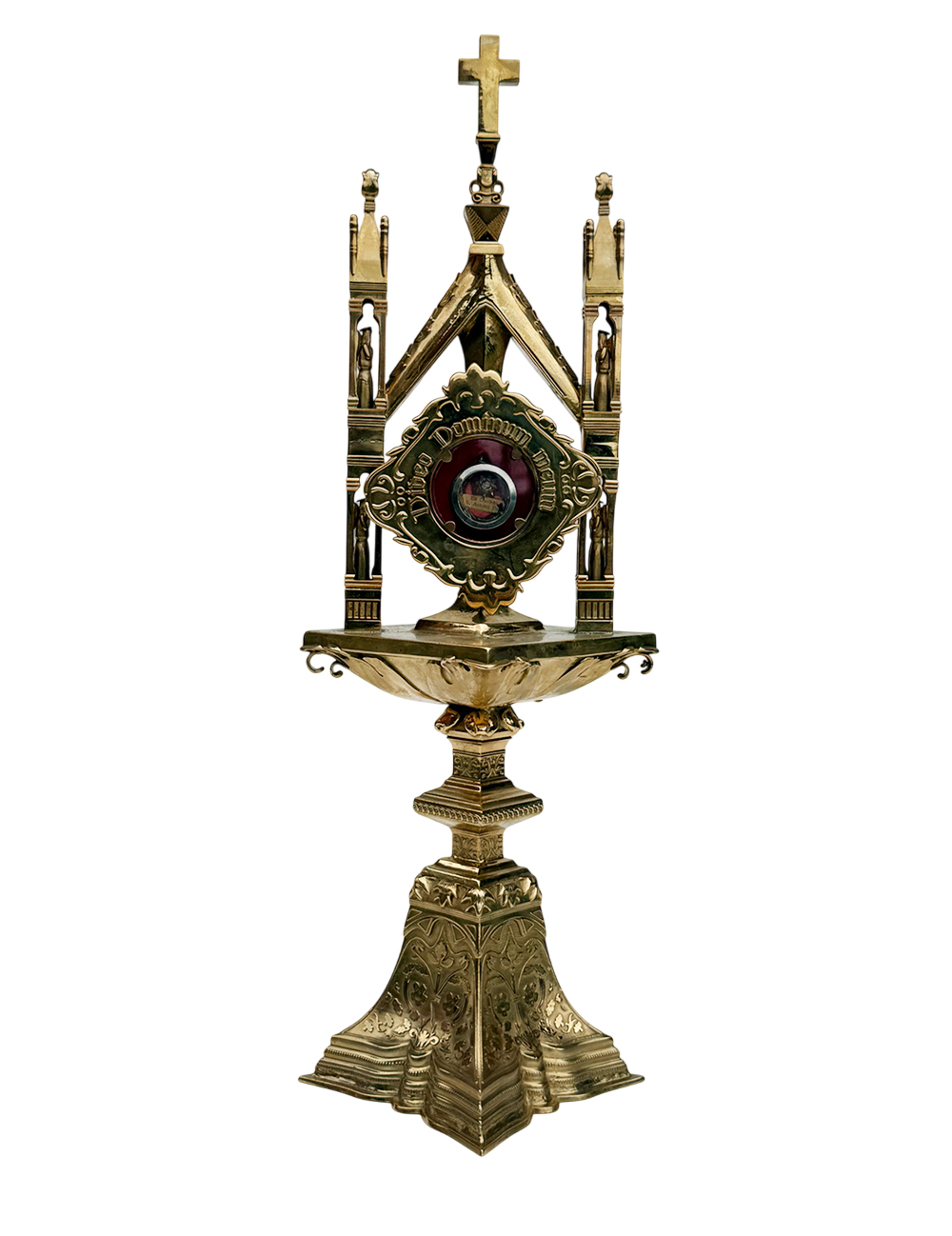
Anthony of Padua
Antonius Patavinus
Patronage
Lost items, married couples, the poor
Saint Anthony of Padua was born in 1195 in Lisbon. He was first an Augustinian canon, but moved by the martyrdom of Franciscan brothers in Morocco, he later joined the Order of Friars Minor. Although he desired to go on missionary journeys, illness kept him in Europe and led him to Italy, where his extraordinary preaching talent was discovered. Anthony proved to be an outstanding theologian, a gifted preacher, and a passionate herald of the Gospel, able to unite doctrinal depth with clarity and simplicity of expression. He was also renowned as a miracle worker and was deeply venerated by the faithful, who called him the “Hammer of Heretics” and the “Ark of the Covenant.” He died in Padua on June 13, 1231, and was canonized only one year later. In 1946, he was declared a Doctor of the Church. He is the patron saint of lost things, marriages, and the poor, and his relics are preserved in the basilica in Padua. His life reminds us that the truth of the Gospel, proclaimed with love, has the power to transform hearts.
Clare of Assisi
Clara Assisiensis
Patronage
Religious sisters, television
Saint Clare of Assisi was born in 1193 in Assisi into a noble family. Inspired by the example and teaching of Saint Francis, she renounced wealth and chose a life of poverty, prayer, and total dedication to God. She founded the Order of Poor Ladies, later known as the Poor Clares, the Second Franciscan Order, whose life was centered on contemplation, simplicity, and radical poverty. Clare was a woman of deep faith and remarkable spiritual strength—when imperial troops laid siege to the convent of San Damiano, she defended her sisters not with weapons but through prayer and the exposition of the Blessed Sacrament, entrusting the community to Christ’s protection. She composed her own monastic rule, approved shortly before her death, an exceptional achievement in the Church of her time. She died in 1253 and was canonized two years later. She is the patron saint of television, embroidery workers, and radio, and her relics rest in the Basilica of Saint Clare in Assisi. Her life shows that quiet contemplation and fidelity to the Gospel possess the power to transform the world.
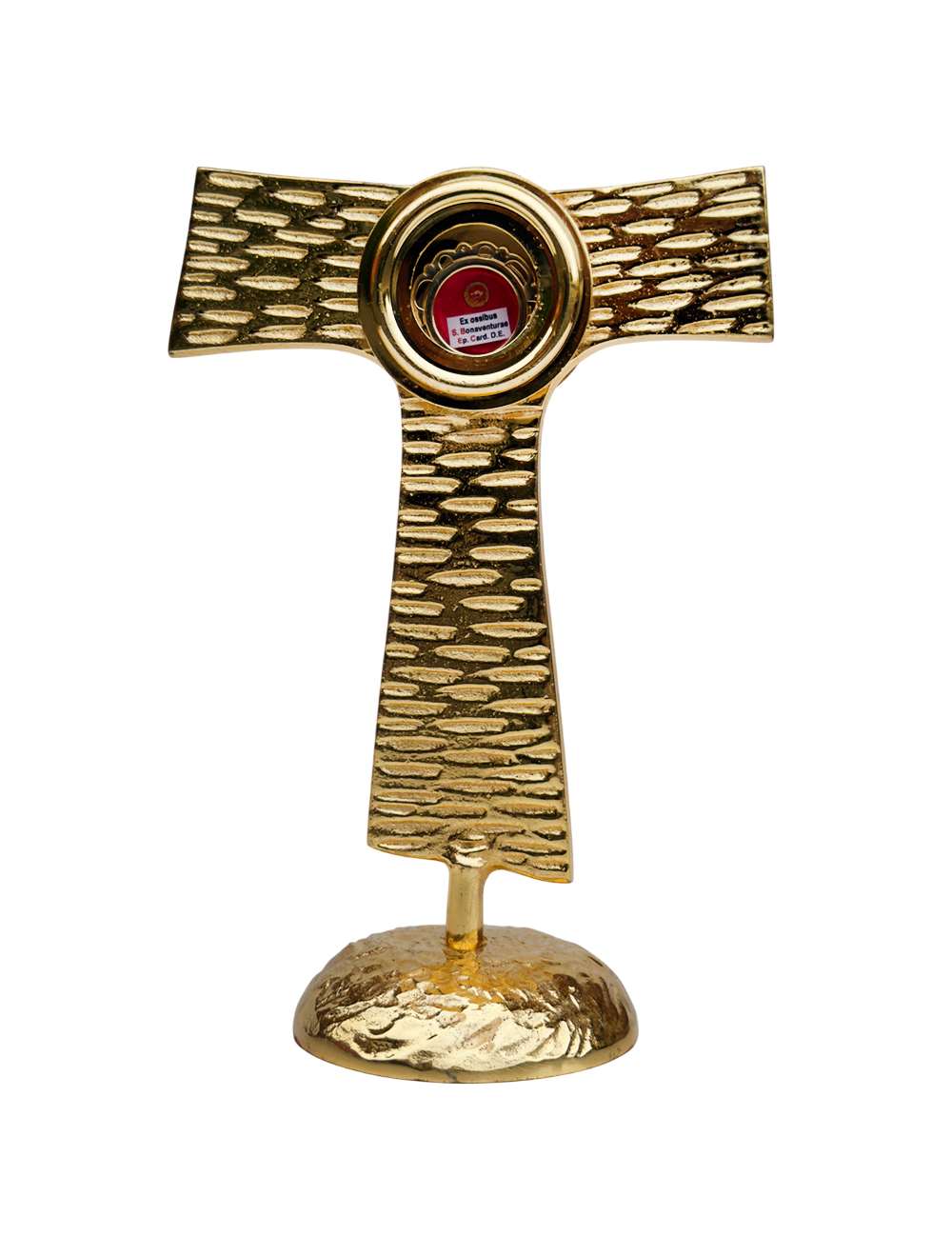
Bonaventure
Bonaventura Bagnoregiensis
Patronage
Theologians, Franciscans
Saint Bonaventure was born around 1217 in Bagnoregio, Italy, and as a young man entered the Order of Friars Minor, where he soon became known for his wisdom, holiness, and love of truth. He studied at the University of Paris and emerged as one of the greatest theologians of the thirteenth century, uniting the precision of scholastic theology with the depth of mystical experience, for which he was given the title “the Seraphic Doctor.” As Minister General of the Franciscan Order, he played a decisive role in shaping its spiritual identity, fostering unity, fidelity to the charism of Saint Francis, and a harmonious balance between contemplative life and apostolic mission. In 1273 he was appointed cardinal and Bishop of Albano, yet he remained a man of humility and service to the Church. He died in 1274 during the Council of Lyon. He is the patron saint of theologians and Franciscan schools, and his works, especially The Journey of the Mind into God (Itinerarium mentis in Deum), continue to inspire a contemplative path that leads from the knowledge of creation to union with God.
Maximilian Kolbe
Maximilianus Maria Kolbe
Patronage
Prisoners, families, journalists
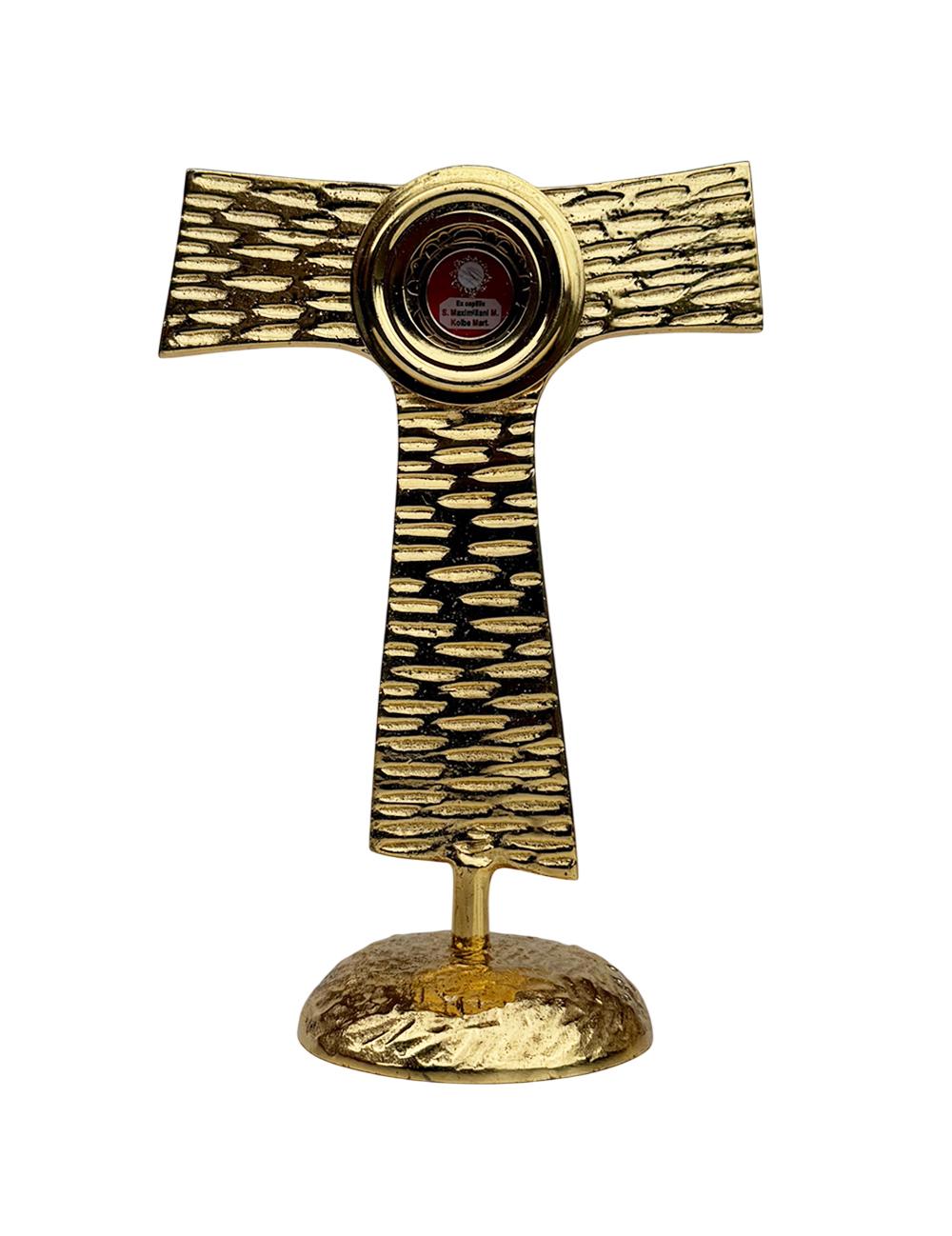
Saint Maximilian Mary Kolbe was born in 1894 in Zduńska Wola, Poland, and entered the Order of Friars Minor Conventual, where he developed an extraordinary apostolic zeal. He became known as a preacher, publisher, and missionary, entirely devoted to promoting devotion to the Immaculate Virgin Mary. He founded the monastery of Niepokalanów, which became the largest Catholic monastery in the world, and led extensive evangelization and publishing efforts that reached countless people. As a missionary, he also worked in Japan, where he prudently and courageously fostered Franciscan life. During World War II, he was arrested by the Germans and imprisoned in the Auschwitz concentration camp. There he bore the ultimate witness of love by voluntarily offering his life through death by starvation in place of a fellow prisoner, a husband and father. He died on August 14, 1941. In 1982, he was canonized by Pope John Paul II as a martyr of charity. He is the patron saint of families, journalists, and Poles living abroad, and his life shows that love stronger than hatred can prevail even in the most inhuman conditions.
John of Capistrano
Ioannes Capistranus
Patronage
Preachers, soldiers
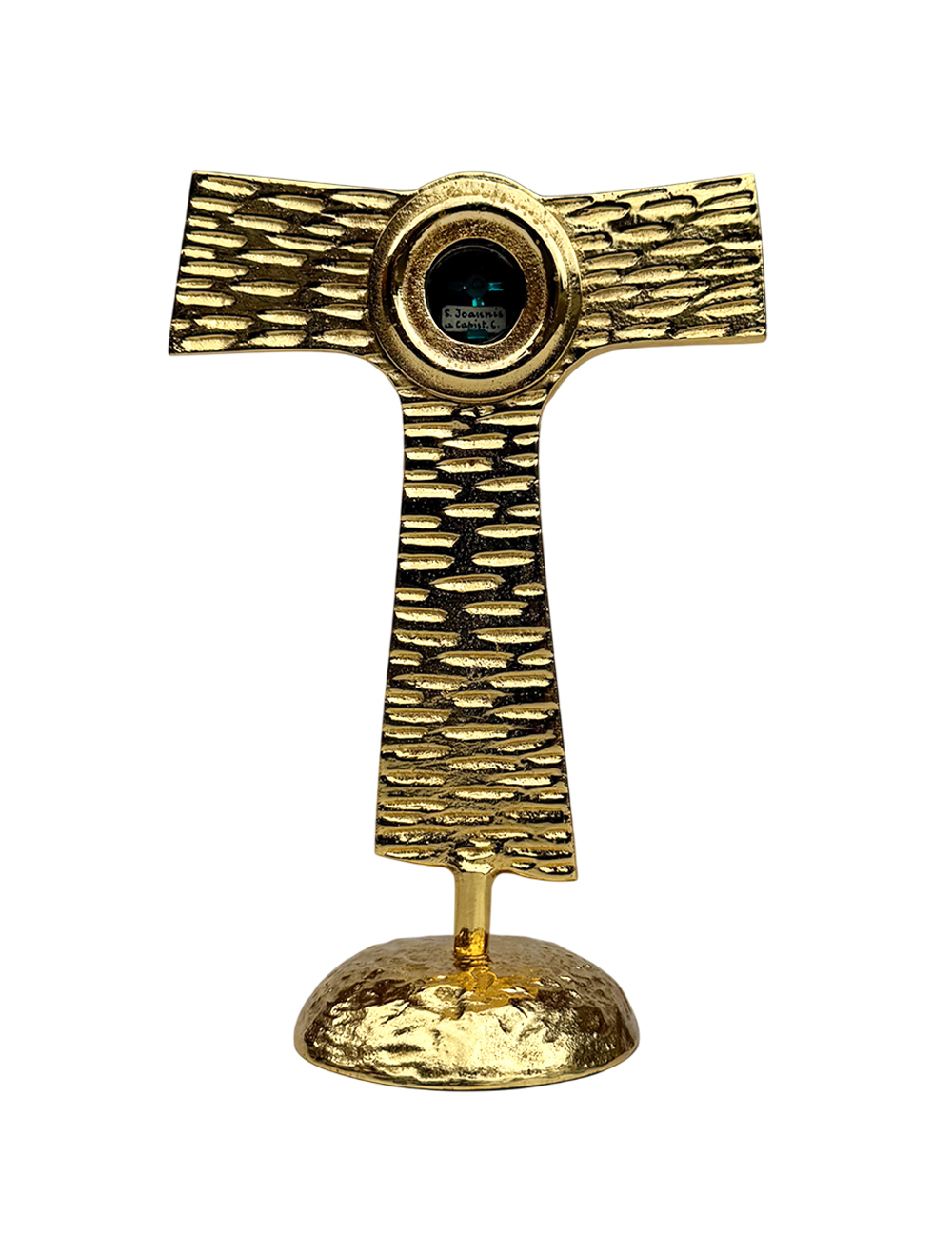
Saint John of Capistrano was born in 1386 in Capestrano, Italy, and was first trained as a lawyer and public official before entering the Order of Friars Minor. After his conversion, he became one of the most renowned preachers and missionaries of the fifteenth century, traveling throughout Europe and calling people to a renewal of faith, moral integrity, and Gospel-centered living. His preaching drew large crowds and deeply influenced the religious life of cities and nations. He is best remembered as a spiritual leader during the defense of Belgrade in 1456, when, together with the Hungarian forces led by John Hunyadi, he strengthened the defenders and helped halt the advancing Turkish army. This event became a powerful sign of unity, faith, and courage in the face of grave danger. John of Capistrano died in 1456, shortly after these events. He is the patron saint of lawyers, judges, and military personnel, and his relics rest in Ilok, Croatia. His life shows that the word of the Gospel, joined with courage and responsibility, can shape the destiny of individuals and nations.
Bernard of Quintavalle
Bernardus Quintavallensis
Patronage
The first Franciscans
Blessed Bernard of Quintavalle was one of the first and closest companions of Saint Francis of Assisi and among the earliest brothers of the Order of Friars Minor. He came from a wealthy and respected family in Assisi, but moved by the radical witness of Francis’s life, he sold all his possessions and distributed them to the poor, choosing the path of evangelical poverty. His decision became one of the first clear signs of the emerging Franciscan movement. Bernard was known for his humility, his fidelity to the spirit of poverty, and his consistent imitation of Christ in a life of fraternity and simplicity. He took part in shaping the first community of brothers and gave an example of a life completely devoted to God. He died around the year 1241. He is venerated as a model of the first brother who wholeheartedly followed the path of Saint Francis, showing that the beginnings of great works are born from a simple and faithful “yes” to God.
Didacus of Alcalá
Didacus Complutensis
Patronage
Cooks, religious brothers
Saint Didacus of Alcalá, also known as Didacus, was born in the fourteenth century in Spain and entered the Order of Friars Minor, where he became known for his deep humility, simplicity, and devoted care for the sick. Though he lacked formal education, he was distinguished by wisdom of heart, obedience, and generous service to the poor and suffering. He also served as a missionary in the Canary Islands, where he proclaimed the Gospel through the simple witness of his life. During his stay in Rome, he became renowned for miraculous healings of the sick during the Jubilee Year of 1450, which greatly contributed to the spread of his veneration. He died in 1463, leaving behind a reputation for holiness and kindness. He is the patron saint of cooks and religious brothers, and his devotion flourished especially in Spain and Latin America. His life reminds us that holiness is born of humble service and love lived faithfully in everyday duties.
Ambrose of Milan
Ambrosius Mediolanensis
Patronage
Beekeepers, preachers, Milan
Saint Ambrose was born around the year 340 in Trier and received a legal education, serving as an administrator before being unexpectedly chosen as Bishop of Milan. As a shepherd of the Church, he became renowned for his courage in defending the faith, especially against Arianism, and for his independence from secular authority, affirming the primacy of God and conscience. He was an outstanding preacher, teacher, and theologian, whose preaching had a profound influence on Saint Augustine, whom he led to baptism. Ambrose left a rich theological and liturgical legacy, including hymns and treatises that shaped the spirituality of the Western Church. He died in 397. He is one of the four great Doctors of the Latin Church and the patron saint of beekeepers, musicians, and the city of Milan. His life reminds us that wisdom joined to courageous faith has the power to transform both the Church and history.
Thomas Aquinas
Thomas Aquinas
Patronage
Theologians, students
Saint Thomas Aquinas was born in 1225 in Italy and entered the Order of Preachers, becoming one of the greatest theologians in the history of the Church. He studied in Naples, Paris, and Cologne, where his teacher was Saint Albert the Great, who quickly recognized the depth and brilliance of his student’s mind. Thomas authored monumental theological works, above all the Summa Theologica, which remains a foundational text of Catholic theology and a classic example of the harmonious union of faith and reason. His thought demonstrates that revealed truth and rational inquiry are not opposed, but together lead to the one Source of all truth. Thomas was not only a scholar but also a man of profound prayer and contemplation, a balance that gives his writings their enduring spiritual depth. He died in 1274 while traveling to the Council of Lyon. He was canonized in 1323 and declared a Doctor of the Church in 1567. He is the patron saint of theologians, students, and universities, and his life reminds us that authentic knowledge ultimately leads to the praise of God.
Leopoldus Mandic
Leopold Mandić
Patronage
Confessors, ecumenism
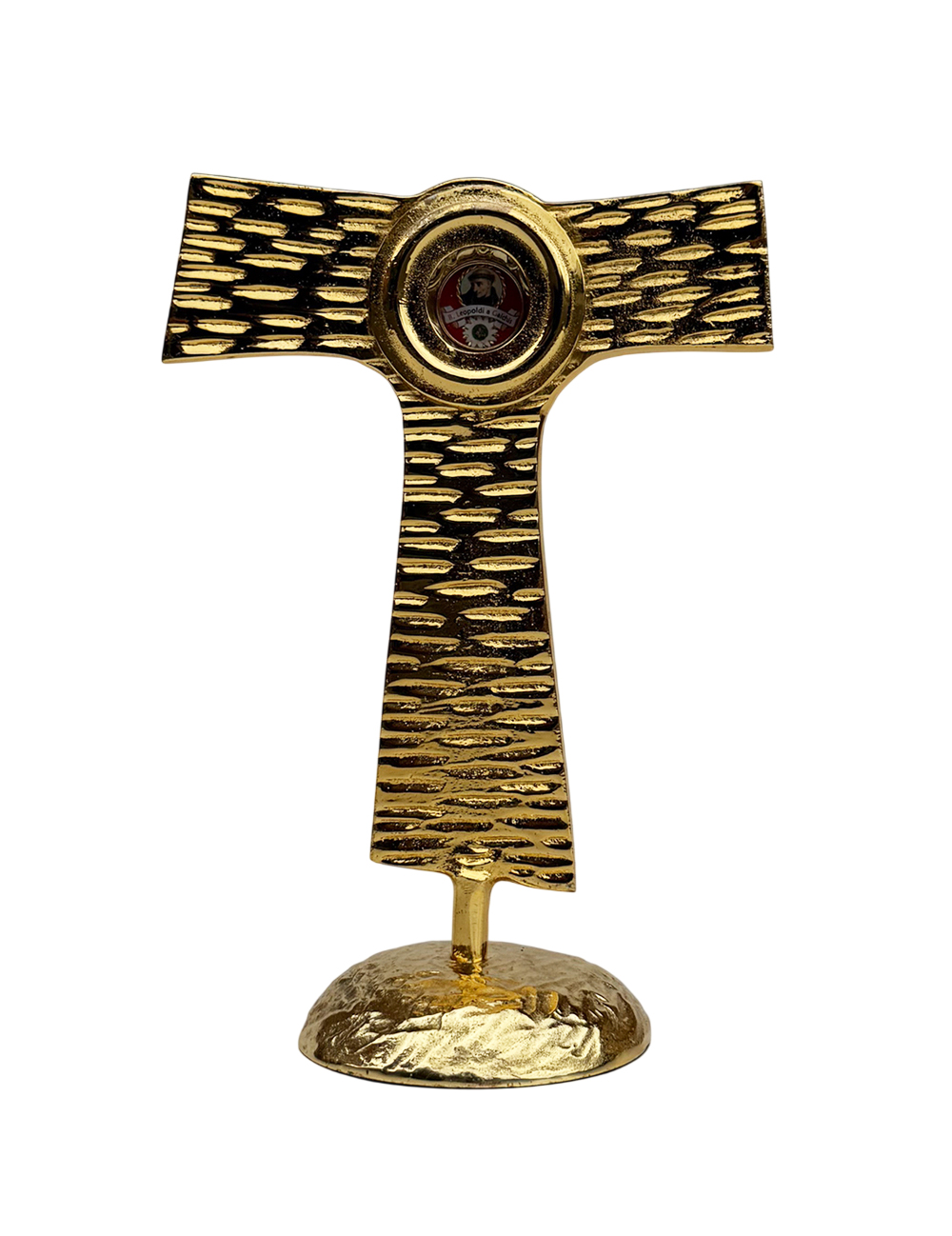
Saint Leopold Mandić was born in 1866 in Herceg Novi, Dalmatia, and from an early age felt a strong desire to become a priest and proclaim the Gospel. He entered the Order of Friars Minor Capuchin and was ordained a priest, but because of fragile health he was unable to fulfill his dream of missionary work. He spent his entire life in the Capuchin convent in Padua, where he discovered and faithfully lived a unique vocation to the ministry of reconciliation. He became renowned as an extraordinary confessor, to whom crowds of faithful came seeking forgiveness, inner peace, and spiritual comfort. Leopold spent countless hours in the confessional, bringing God’s mercy to souls with humility, gentleness, and deep compassion. Though he himself suffered from illness and physical limitations, he never lost his spirit or joy in serving others. He often said that his mission was “one soul at a time.” He died in 1942, and his tomb soon became a place of pilgrimage. He was canonized by Saint John Paul II and is venerated today as a patron of unity, reconciliation, and the sacrament of confession.
Zbigniewus Strzalkowski
Zbigniewus Strzalkowski
Patronage
Missionaries, Peru
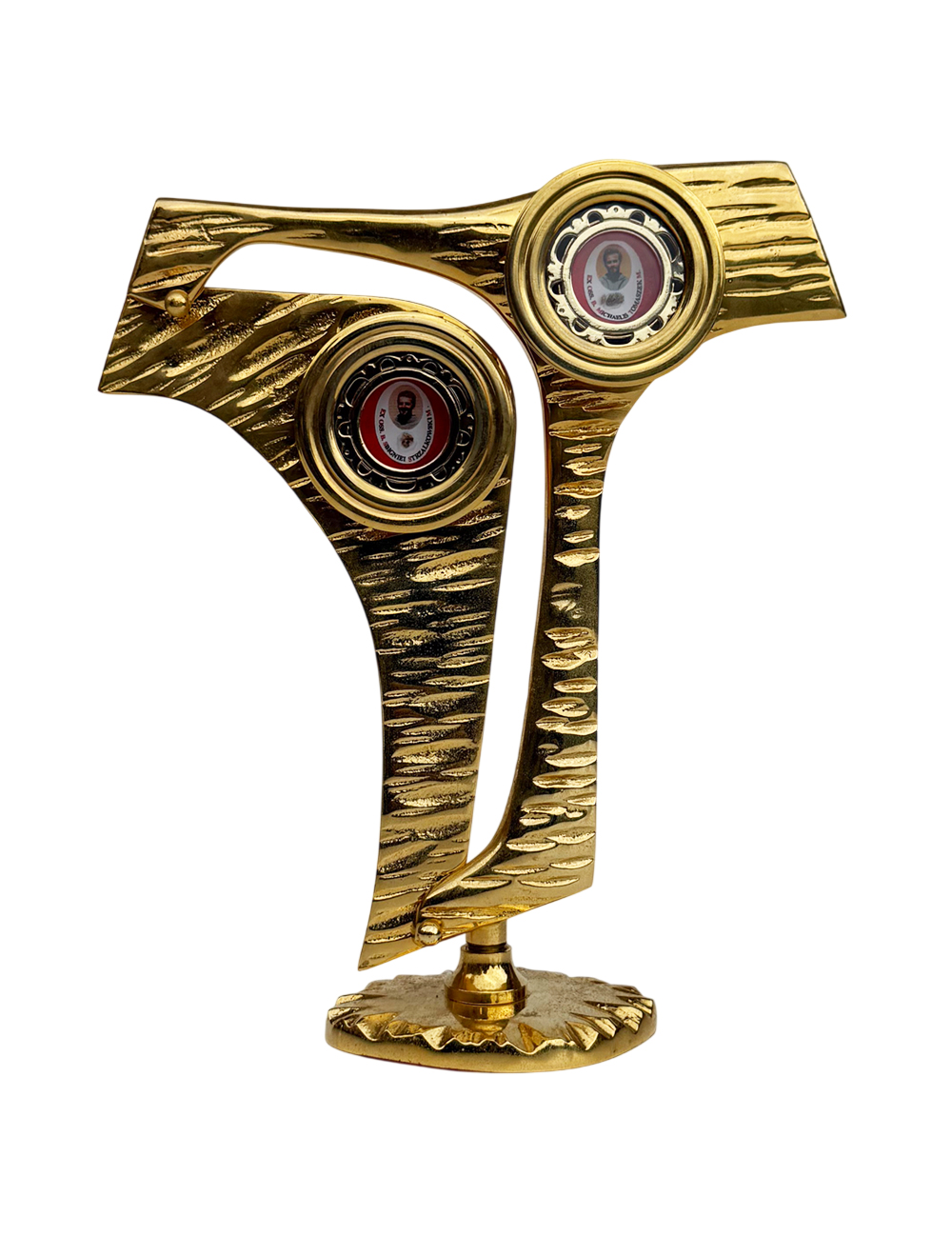
Blessed Zbigniew Strzałkowski was born in 1958 in Tarnów, Poland, and as a young man entered the Order of Friars Minor Conventual, desiring to dedicate his life to the service of God and others. After completing his studies and being ordained a priest, he began pastoral ministry and later, together with Blessed Michał Tomaszek, departed on missionary service to Peru. There he served in a parish, offering both spiritual and material assistance to the local people, with particular dedication to catechesis, youth ministry, and care for the sick and the poor. He was known for his joyful disposition, simplicity, and deep life of prayer, and he lived his daily ministry in a spirit of fraternal closeness. In 1991 he fell victim to a terrorist attack carried out by the Shining Path and suffered martyrdom for the faith, giving his life for Christ and the Church. His martyrdom became a powerful witness to God’s love and fidelity to the Gospel to the very end. He was beatified by Saint John Paul II in 1999 and is venerated as a patron of missionaries and victims of religious persecution.
Michael Tomaszek
Michael Tomaszek
Patronage
Missionaries, Peru
Blessed Michał Tomaszek was born in 1960 in Łękawica, Poland, and from an early age was deeply involved in the life of the Church, serving as an altar server and actively participating in parish life. He entered the Order of Friars Minor Conventual, responding to a call to dedicate his life to God and to others. After completing his studies and being ordained a priest, he was sent on missionary service to Peru, where he worked in Pariacoto together with Blessed Zbigniew Strzałkowski. Through his daily pastoral ministry, he bore witness to God’s love, showing particular care for the poor, children, and young people. He was known for his joy, patience, and generous spirit, embracing even the most demanding tasks with readiness and trust in God. In 1991 he was murdered by terrorists of the Shining Path and suffered martyrdom for the faith, giving his life for Christ and the Church at a young age. His death deeply affected communities both in Peru and in Poland. He was beatified in 2015 together with Blessed Zbigniew Strzałkowski. His witness continues to inspire young people to live with courage, fidelity to the Gospel, and wholehearted commitment to service.
Seven Sleepers of Ephesus
Septem Dormientes Ephesini
Patronage
Youth, courage in faith
The legend of the Seven Sleepers of Ephesus tells the story of seven young Christians—Maximilian, Malchus (Dennis), Martinian, John, Dionysius, Serapion, and Constantine—who lived in the third century during the persecutions under Emperor Decius. In order to avoid renouncing their faith and suffering martyrdom, they took refuge in a cave near Ephesus. According to tradition, God caused them to fall into a deep sleep that lasted for many years, until Christianity had become a free and accepted religion. When they awoke, their story became a powerful sign of the victory of faith over persecution and a testimony to the hope of the resurrection of the dead. The account of the Seven Sleepers quickly spread throughout the Christian world and brought comfort and encouragement to believers facing oppression. The Sleepers of Ephesus came to symbolize eternal life, divine providence, and God’s faithfulness to those who trust in Him. Their legend continues to remind the faithful that even in the darkest moments of history, God watches over His people and leads them toward the fullness of life.

